What is Elliott
Wave Theory? Wave analysis is a very popular form
of technical analysis that can be applied to
stock charts to
forecast the future direction of prices....but what
IS the
Wave Theory and what
can it do for you and me?
An ability to recognize where any
market is in a cycle at a given point in time can help to pinpoint high
probability trade entries and exits, thus reducing the
frequency
of any losing trades and allowing the trader to run positions for
longer so as to maximize profits from every trade.
Brought into the mainstream in the 1970s by Frost and
Robert Prechter through the
publication of their best seller, Elliott
Wave Principle and successful application
of the Wave
theory
can substantially
improve a traders profitability. The beauty of it is that it can be
used to help forecast future prices when trading in any market whether
your interest is in trading Forex, Stocks, Commodities such as
Gold and Crude, Indexes or Bonds.
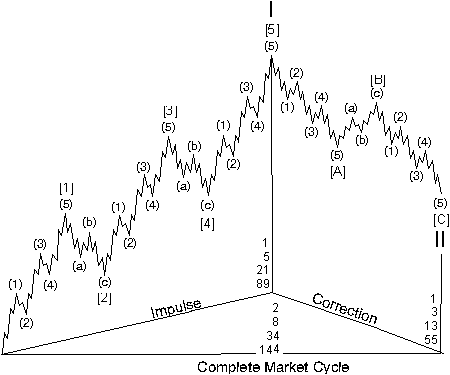
The image on the
left shows a complete cycle
but how do you recognize
which wave the market is in at any given point?
You do not need to be an expert Elliottwave theorist to benefit from
using the wave theory, as even by gaining an understanding of
the wave patterns will prove itself to be time well spent as
you will soon start
to see your stock charts in a whole new light and it will very quickly
be
reflected in the bottom line of your
trading results. Start
here to Learn Elliott
Wave Theory basics where you will learn the basics of
wave formation, the variations on the wave
patterns. Learn how to recognize where the market is in its current
cycle and forecast the future direction of prices.
Elliott
Wave Principle - Now
Available Free
Learn all
you need to know about applying Elliottwave patterns profitably
with this Free online edition of Frost and Prechters Elliott Wave
Principle.
It
is one of the all time best
sellers for technical traders and you
can be reading the 248 pages of this classic investment analysis
manual in minutes.
This
complimentary online edition of Elliott
Wave
Principle, has
recently been
released by Robert Prechter and EWI.
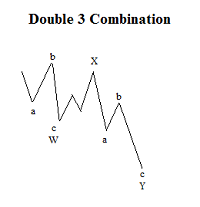
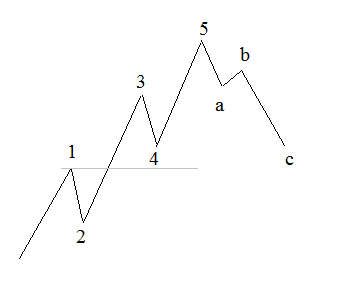
Prechter's best seller will help you learn the 13 Elliottwave patterns
that
can occur in
the charts of the financial markets along with the basics of counting
waves, and
the simple rules and guidelines that will help you to apply Elliottwave
analysis for
yourself.
Who Uses
Elliott's Wave Theory
Image: Robert
Prechter
Wave
patterns analysis today is used
by traders
and investors of all levels within the spectrum of the
markets. From the small private
investor who is trading forex from
his spare
room, to the
managers of multi billion dollar investment funds.
As
with all Technical Analysis,
one of the major benefits
of applying
Elliott
Wave Theory to our stock charts analysis is that
it can be
applied
equally as well at an intraday level as it can be applied to
a multi
decade stock chart.
I doubt
that any
fund manager these days would make any investment decisions without
first
considering where the market could be within an Elliottwave cycle,
even if only in its basic form.
Free
Guide
Elliott Wave
Theory PDF
Free to
download, the Traders
Day Trading free Elliott
Wave Theory PDF quick start guide. Download it free now
for a quick
overview of the basics.
It is a handy reference guide to the
basics of the wave patterns and wave formation.
Impulse
Waves - Part 1 of the EWT basics guide. Learn
the basics of wave structure and how impulse waves are formed....
Corrective
Waves - Part 2 of the Wave Theory basics guide. Learn
the basics of wave structure and how corrective waves are formed....
Trading
Wave Theory - The practical application of
trading Elliottwave theory, find out how to put the theory into
practice in reality. Which wave do I buy? What are the Elliott Wave
trading rules?...
Fibonacci Sequence
- Learn the basics of Fibonacci trading. Find out how the Fibonacci
sequence works hand in glove with Elliott Wave theory to form a
combination of technical indicators that provides us with an
extremely powerful trading tool.


 The image on the
left shows a complete cycle
but how do you recognize
which wave the market is in at any given point?
The image on the
left shows a complete cycle
but how do you recognize
which wave the market is in at any given point?
 Wave
patterns analysis today is used
by traders
and investors of all levels within the spectrum of the
markets. From the small private
investor who is
Wave
patterns analysis today is used
by traders
and investors of all levels within the spectrum of the
markets. From the small private
investor who is